• Plastic Problems: A Potential Mitigation Method

    January 11, 2025
    environmental issues, plastic waste, Sustainability, sustainable practices

    It is not uncommon knowledge that plastics are posing serious threats towards society and the environment, regardless of manufacturer intentions. Plastics are anywhere and everywhere – cosmetics, children’s toys, product packaging, washer and dryer emissions, et cetera. While these polymers are deeply ingrained into the supply chain, scientists and researchers uncover more knowledge every year on its adverse and unsustainable effects on humans, animals, and the environment alike.
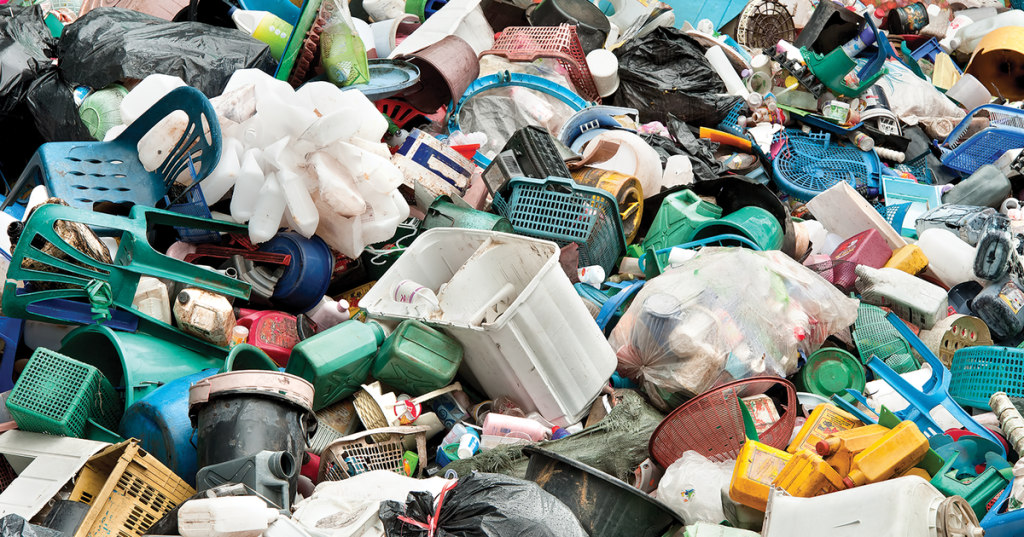
    plastic waste
    Photo from Waste 360

    Plastic pollution is a major driver in environmental advocacy. Plastics have horrendously invaded cityscapes, freshwater, beach and ocean biomes galore, and we have now detected microplastics in not only the intestines of fauna but even the human bloodstream. While there is uncertainty of the full extent of microplastic damage, it is concerning nonetheless. Asbestos, radium, and lead make way . . . this is the age of plastic people!

    Figuring out how to mitigate plastic pollution is a huge challenge. Society cannot mass exodus all plastic product into oblivion, of course. Plastics are found in all sorts of consumer goods, and suddenly doing away with it all would truly puncture the standard of living of modern times. It is not our fault.

    Leave No Trace

    One action most of us are able to do (to some extent) is lessening plastic waste. According to the United Nations’ Environmental Programme, as of 2021, humanity produces 400 million metric tons of plastic waste annually. That is approximately worth . . . 57,142,857 heavy African elephants. Yikes.
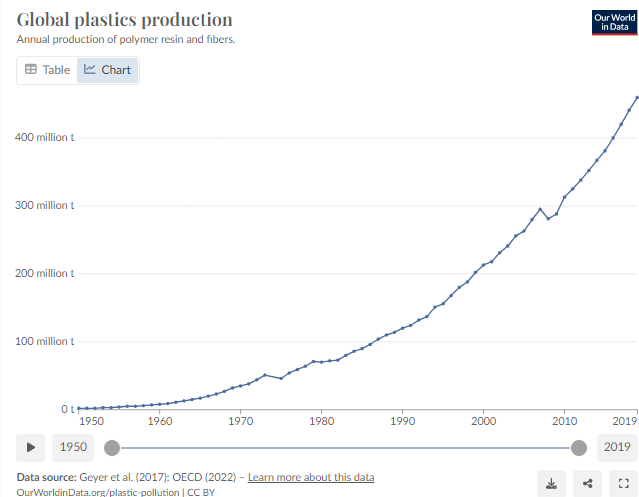
    Plastic waste production 1950-2019
    Graph from Our World in Data

    I am, of course, guilty of this too. Despite my terrible feelings when it comes to tossing away damaged screen protectors and Ziplock bags, I just do not know what else I can do with them. There is recycling potential, but what am I going to do with a used plastic wrap?

    Not too long ago, a friend reached out to me via text. We will call him Tim. Tim asked, “wanna make ecobricks and hang out?”

    Of course, I think to myself, what the hell does that mean? I say, “now that’s an opening line. Never heard that one before.”

    I had truly never heard of the term, so I inquired further.

    Eco-Bricking

    The definition is in the name. Ecobricks are sturdy, dense, eco-friendly “bricks” made out of recycled plastic. Specifically, they are crafted from transparent polyethylene terephthalate (PET) water bottles. You know, the typical Aquafina and Deer Park . . . otherwise most of the branded bottled waters.
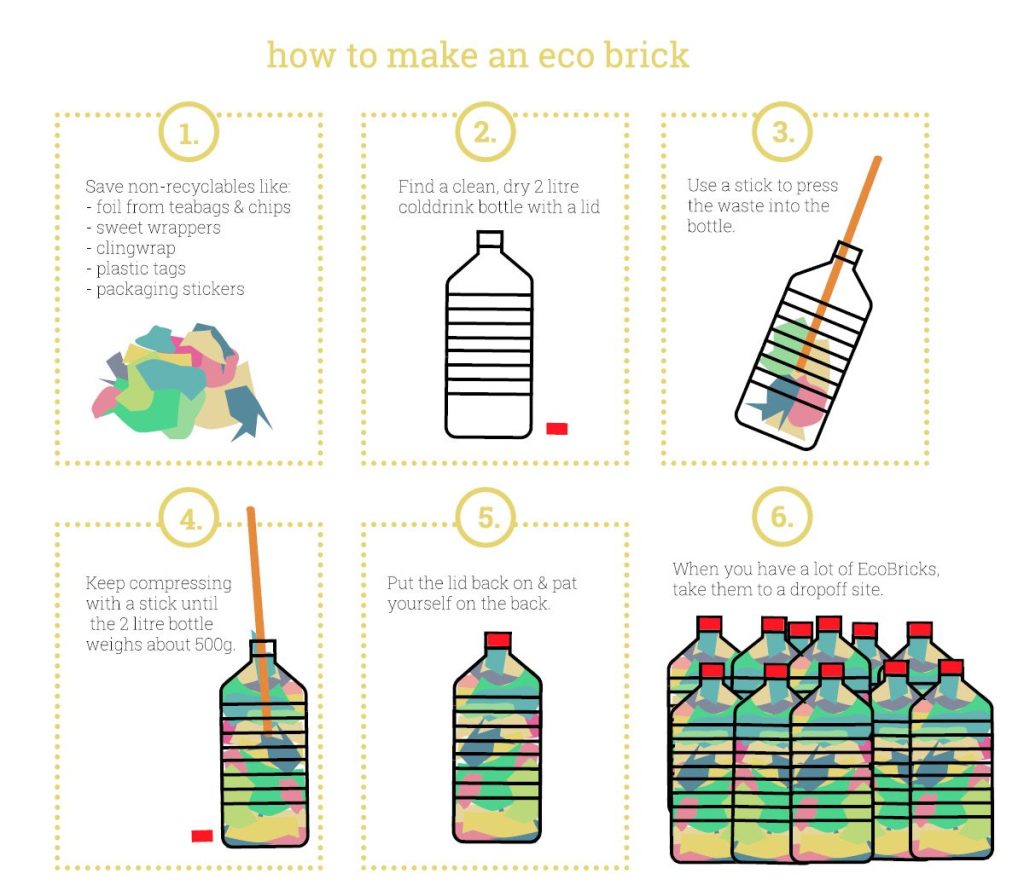
    How to Ecobrick
    Photo from Skinny laMinx

    To make an Ecobrick, you must pack these plastic bottles solidly with a bunch of other small plastics. Yes – a brick made out of completely plastic! All of one’s plastic waste condensed into an object that can be used for greater things beyond landfills. According to the Ecobricks website, recycling plastics in this way prevents them from degrading into tiny microplastics; keeps trash out of landfills; and aids with carbon sequestration in which our Earth naturally does already.

    This now-dubbed “plastic sequestration” is incredibly useful as it greatly prologues the lifespan of plastic, which is particularly good for making a long-lasting brick, but also it prevents abiotic degradation (i.e., caused by heat or pressure) of plastics, which releases harmful chemicals into the atmosphere: UV stabilizers, plasticizers, polyfluoroalkyl substances, phthalates, flame retardants, bisphenols, among others. In other words, compacting small plastics within a PET bottle will ideally stop this process from happening at all.

    To make an Ecobrick, all you need are a few things: PET bottles, smaller plastics to fill it with, a pair of scissors (to cut down larger plastics), and a wooden or bamboo stick to shove and layer the materials through the opening of the bottle. You want to make sure the bottle is thoroughly compact, leaving no gaps/air pockets to prohibit flammability and potential degradation.

    Ecobrick color wall
    Photo from Project Wing

    This can be a tedious process. It is fun and exciting at first, knowing that we can actually make a useful material out of our plastic “trash.” Yet, there are so many tiny requirements necessary for a well-working Ecobrick that does more good than harm. You must layer and compact the bottle with a stick which hardly has any surface area as it needs to fit through the cap. The first Ecobrick I made with Tim took a solid four hours to complete. Yes . . . one brick per four hours. Fortunately, it was not just Tim and I – we had a whole community group attend. Despite moving slowly on an individual basis, everyone was able to make a brick, resulting in a dozen completed. If you are interested in Ecobricking, I highly recommend working in a group setting. Perhaps Ecobricking would be wonderful for job creation, because it is surely a time-consuming activity.

    One With The Soil

    What are Ecobricks even used for? A lot of things!
    Most often, I have seen Ecobricks being used to build garden beds, small furniture items, art installations, playground structures, and walls. They are indeed sturdy enough for this. Surprisingly, Ecobrick structures look charming. One might thing that a recycled plastic structure would look a bit odd and dull-colored, but it is quite the opposite. An array of blues, whites, and greens, shimmering from the bottle’s reflection of light. So, do not fret potential “ugliness.” If you so desire, you can be meticulous enough to craft a color scheme.
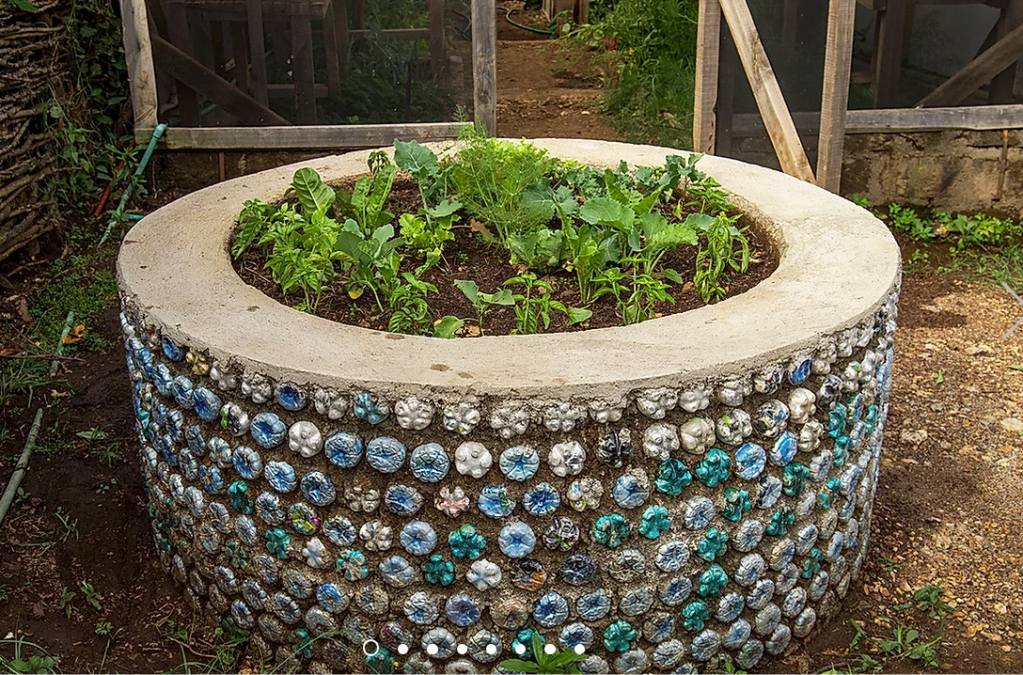
    Ecobrick garden bed, circular planter
    Photo from Ecobricks.org

    My first project with Tim and gang is to build garden beds. We are still in the process of making one, so once it moves along I will update on it here.

    The Good, The Bad, and The Ugly

    While Ecobricking harbors a plethora of positive implications, this activity comes with downsides. Of course, what doesn’t?

    Firstly, as mentioned, Ecobricking is insanely time-consuming. The idea of recycling plastic in this manner is wonderful, but hardly achievable if you are an individual with a busy family or work life. Making Ecobricks alone is not recommended as it could take months upon years to craft anything useful. Otherwise, you might just have a bunch of disassembled plastic and water bottles laying around your house indefinitely.
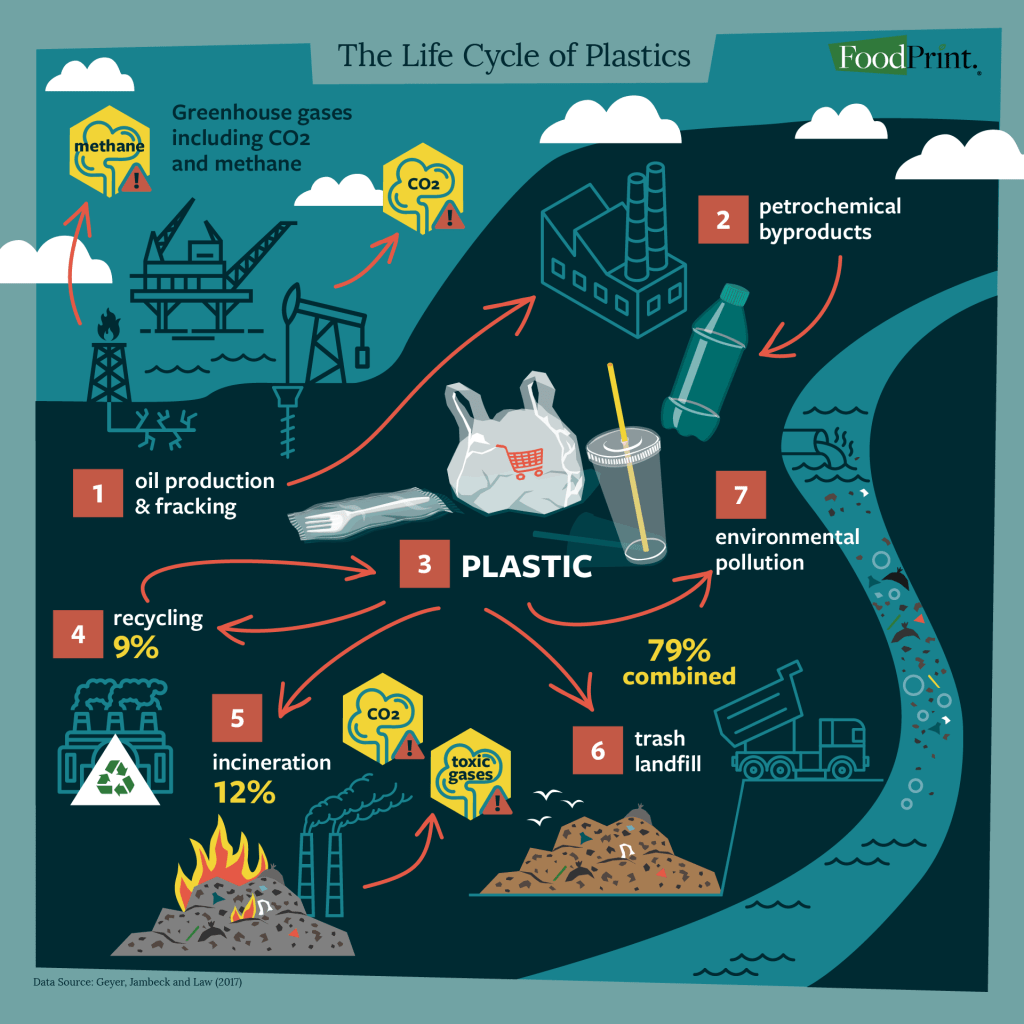
    Plastic lifecycle
    Photo from Foodprint.org

    What makes this activity even more trouble is how specific the process is. You will want to make sure that the plastic scraps you use are clean and dry – nothing with food waste on it either. The PET bottles need to be dried out completely. Why? Well, bacteria and mold just love to grow in organic, wet conditions. This does not exclude plastics unfortunately. And again, with the mistake of leaving air pockets in the bottle can cause abiotic degradation; heat, light, and pressure will cause air to expand and poke microscopic holes in the brick, releasing gas containing harmful chemicals. The toxins will disperse into the soil, into waterways, and into the air . . . so not really any better than it would have been in a garbage dump. Humans are naturally prone to error, so making perfectly dry, compact Ecobricks every attempt is not an easy thing to achieve. On little mistake and the brick is obsolete.

    These mistakes will lead to faster degradation, ultimately ruining their utility as construction material. This is why it is not recommended to build large structures with Ecobricks anyways. The Ecobricking website suggests wrapping clay soil around the bricks to prevent any possible deterioration, but even this method is not full-proof (clay can erode too)!
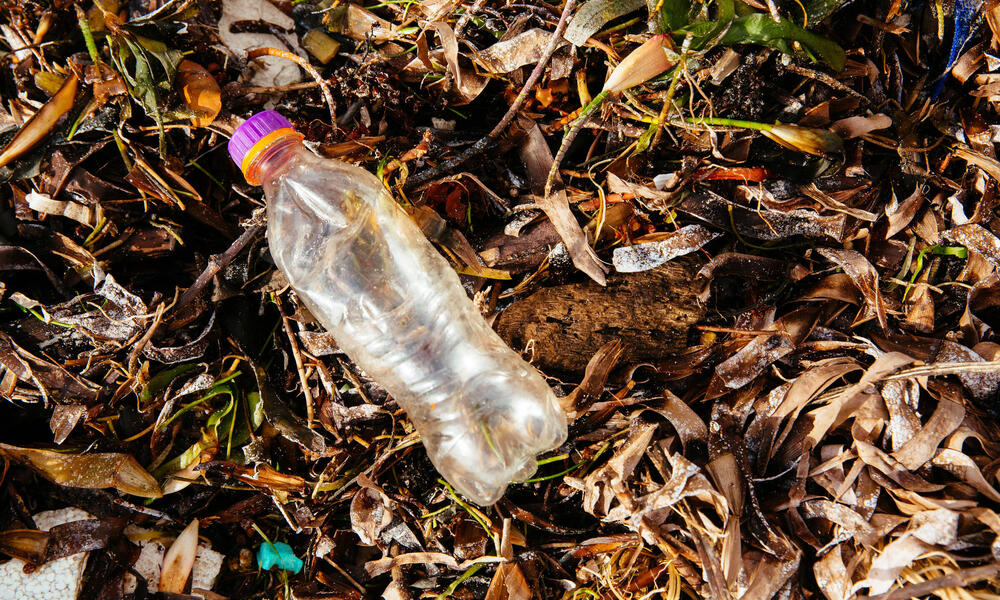
    Plastic water bottle
    Photo from the World Wildlife Fund

    Who is to say the Ecobrick I made is perfectly sound? Maybe I unknowingly left some air pockets. I am unsure, it was my first one. Does this mean my four hours of labor are for naught?

    To Ecobrick, or To Not Ecobrick?

    There are so many positive benefits yet potentially negative consequences to Ecobricking . . . or so it seems.
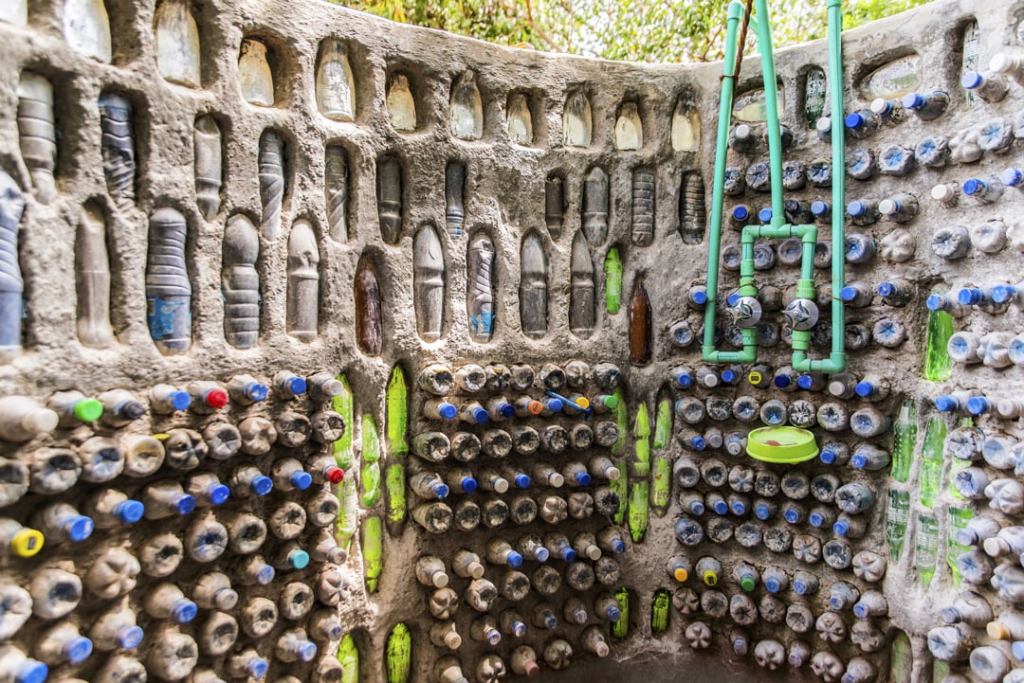
    Ecobrick wall
    Photo from Save Our Seas Foundation

    It is of course a laborious, highly-detailed process, making sure your brick is absolutely perfectly clean, dry, and compact every time. Slight errors can ruin the Ecobrick fully, causing faster degradation. Then again . . . even if your Ecobrick has flaws, is a landfill any better? Are you, the individual, more at fault for plastic pollution or are manufactures and corporations who are making the plastics to begin with?

    I would say, if you have the time, give Ecobricks a chance. It is better to try and fail than to do nothing at all. Ecobricking is ideally a great way to reduce plastic waste within the household, and costs a whopping $0 to do. Additionally, as it did with me, Ecobricking is a great way to foster a community with a common concern for the environment. I had a great time making Ecobricks with Tim and other members of the community I am either friends with or have not met before. It is easy to have conversations, listen to music, and simply coexist while simultaneously performing a simple, manual task.

    There are of course other and potentially more efficient ways of mitigating plastic problems, like attending beach cleanups, refilling plastic bottles, or just avoid buying plastic at all . . . but it does not hurt to be intrigued by creative solutions. Again, it is better to try and fail than do nothing at all.

    ————————————————–

    The Suit of Wands is a a signifier for creative approaches to everyday problems. We must harness passion and innovation to incite change.

    ————————————————–

    community activities, ecobricking, ecobricks, environment, environmental issues, microplastics, plastic pollution, recycling
    Khloe Turner's avatar

    Freelance writer and environmental justice advocate

    Khloe Turner

    • Instagram
    • Tumblr
    • LinkedIn

    No comments on Plastic Problems: A Potential Mitigation Method
  • A Merry Green Christmas

    November 26, 2024
    environmental issues, plastic waste, Sustainability, sustainable brands

    T’is the season! It is that time of year again:

    Mariah Carey earworms, blinding blue LEDs, prickly evergreens, sugar rushes, emptied wallets and travel anxieties . . . it just doesn’t sound very appealing. Well, at least when it comes to the holiday’s modern commercialized form.

    At its core, whether you celebrate Christmas, Hannukah, Kwanzaa, or Yule, the merriment and love is rather wonderful. We may dance to jingling bells, exchange heartfelt gifts, visit family we may otherwise not often see, sip on hot cocoa, and warm up by the crackling fire. I live in the southern United States, and I have witnessed a “white Christmas” maybe once in my life, but fortunately, it is rather chilly here now with the cool, moist East Coast breeze.

    Every year as I get older and wiser, I recognize the value and art form of gift-giving, something so beautifully primal and endearingly rewarding. It is especially thoughtful when one gives or receives a handmade item, or perhaps sourced from a family friend or local maker. I also value gifts that are either practical or important to the individual. For example, I gifted my little sister a Pokémon keychain I bought from a gaming convention. Keychains are rather useless, but it was a hand-drawn Sprigatito–her first ever Pokémon–surrounded by roses, in which “Rose” is her middle name. It just felt special; it felt meaningful.

    ————————————————————-

    What I am sick of, however, is receiving pointless plastic products, coated in ungodly amounts of wrapping. These items that I might use once or never and forget about them for Christmases to come. Gifts that are given without thought; gifts given in quantity over quality; last-minute shopping sprees or quick Amazon and Temu purchases; more and more mass-manufactured ornaments, lip balms, and wallets. Sometimes these items are given in good conscience but typically they become repeat holiday gifts that still needlessly cause financial frustrations. It’s okay, Grandmother, I don’t need another set of Christmas pajamas . . .

    We feed our credit cards to the c-word (*ahem*, I mean consumerist) machine because society believes that moms and dads must get their children all the latest game systems, Disney merch, and iPhones . . . or else their kid will meltdown in a coal-riddled nightmare tantrum. Do I have to get my father another Amazon toolbox because that’s what all men enjoy? My good friend loves cheap fast fashion from Shein, so might as well get her a single-use, plastic gift card . . .

    Apologies for the rant. Let me get to the point: If you are interested in eliminating these unsustainable holiday items, whether you want to buy your own eco-friendly stocking stuffers or believe that a loved one will appreciate the more personable, environmental shift towards a green Christmas rather than greenwashed, here is a nondefinitive list below, linking to wonderfully sustainable online retailers. Shop recycled, upcycled, and sustainably this holiday season! I firstly want to recommend either crafting your own gifts (if you have the time) or go in person to your local small business. However, if you are not able to do any of this, need to shop quickly, or just love the convenience of sitting at home–here you go!


    Read more: A Merry Green Christmas

    CLOTHING & APPAREL

    GOODWILL: A well-known hand-me-down retailer offering clothing, electronics, toys, books, and more. Very affordable, and a much better alternative to Temu or Shein.

    POSHMARK: Secondhand apparel, clothing, appliances, and beauty products set up like individual “virtual closets,” kind of like a yard sale.

    MERCARI: Similar to Poshmark, selling secondhand clothing and other goods with a very user-friendly interface for both buyers and sellers.

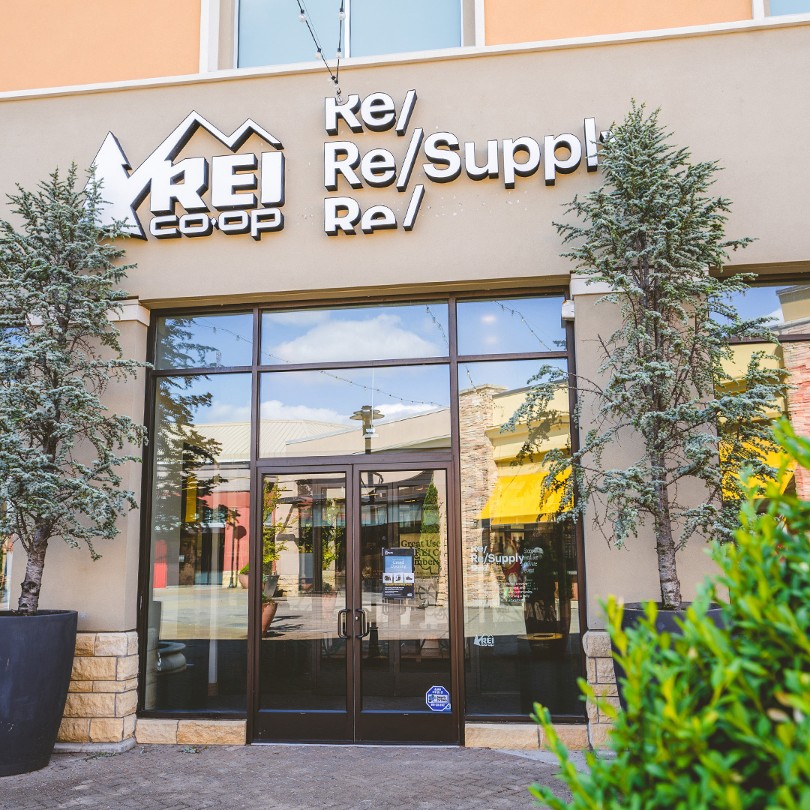
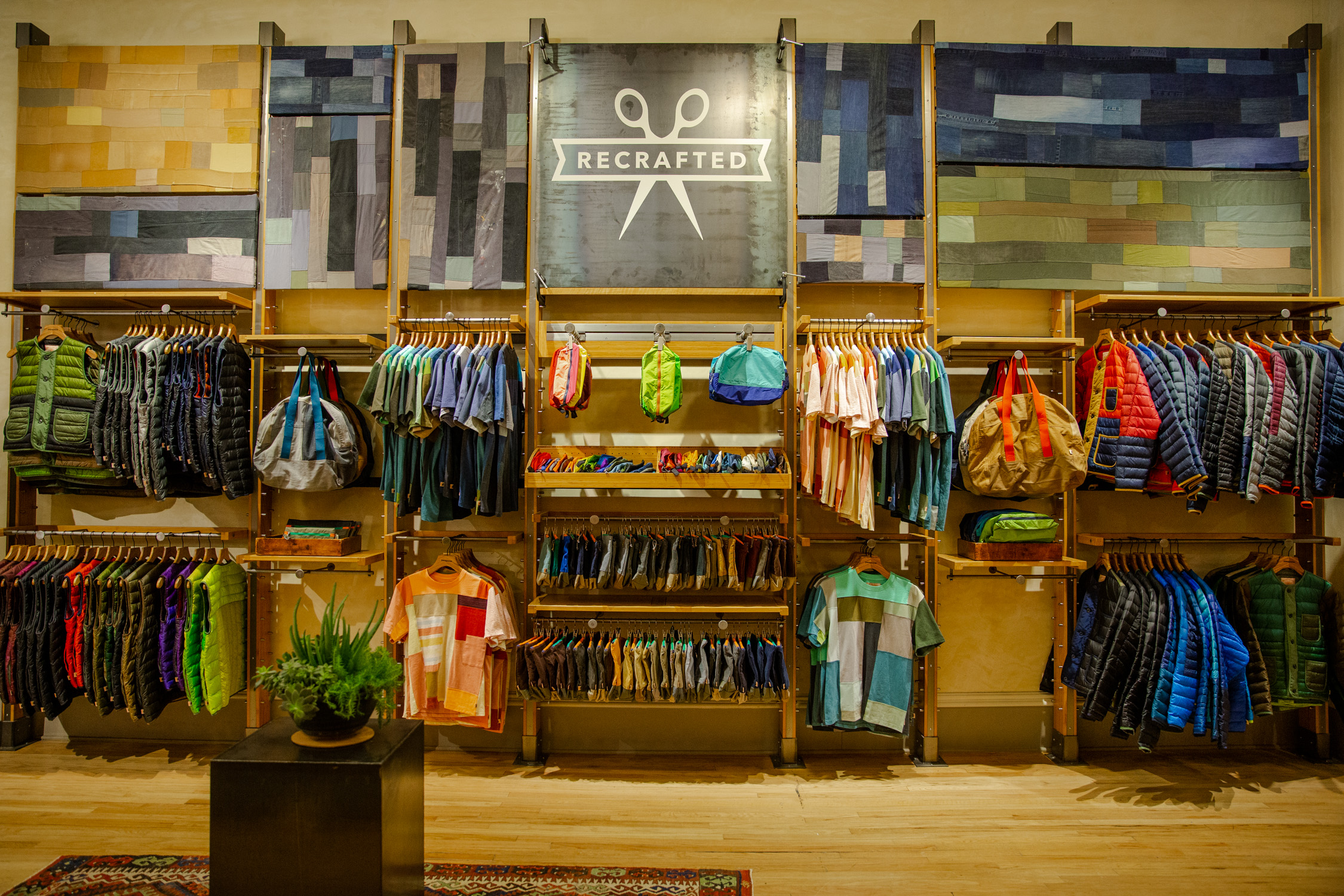
    REI RE/SUPPLY: Gently used outdoor clothing, equipment, and gear from the Rei brand. Re-sold in order to keep items out of landfills.

    PLATO’S CLOSET: U.S. chain that recycles gently used clothes, shoes, and accessories sold at reduced prices.

    PATAGONIA: Sells outdoor clothing, equipment, and food, known for its pledge to environmental sustainability. Yvon Chouinard, former CEO, surrendered his billionaire status and sold the company to a non-profit in which all proceeds go towards fighting climate change.

    VUORI: Athletic and athleisure apparel and accessories made from recycled materials.

    CARHARTT REWORKED: Sustainable resale program of secondhand Carhartt apparel. Offers sturdy and long-lasting workwear.

    EVERYWHERE APPAREL: High-quality clothing brand crafted from 100% recycled cotton.

    DILLYSOCKS: Socks and graphic t-shirts made sustainably from cotton, produced under the Oeko-Tex 100 standard. Everyone wants comfy socks for the holidays!

    ETIKO: Organic cotton, vegan, fair-trade clothing and footwear.

    WILDFANG: Sustainably-made and uniquely gender-neutral clothing and accessories.

    HOUSEHOLD APPLIANCES

    MADE TRADE: A woman-owned online marketplace that sells verified sustainable and ethically-sourced home goods.

    BAMBU: Eco-friendly kitchenware and bathroom-ware made out of bamboo.

    ETTITUDE: Bamboo-based bedding, bathroom and sleep essentials.

    SALTY AURA: Sustainable home and outdoor recreation items, including rugs, camping mats, bedding, and clothes. Proceeds go to Eden Restoration Projects and OpBlue.

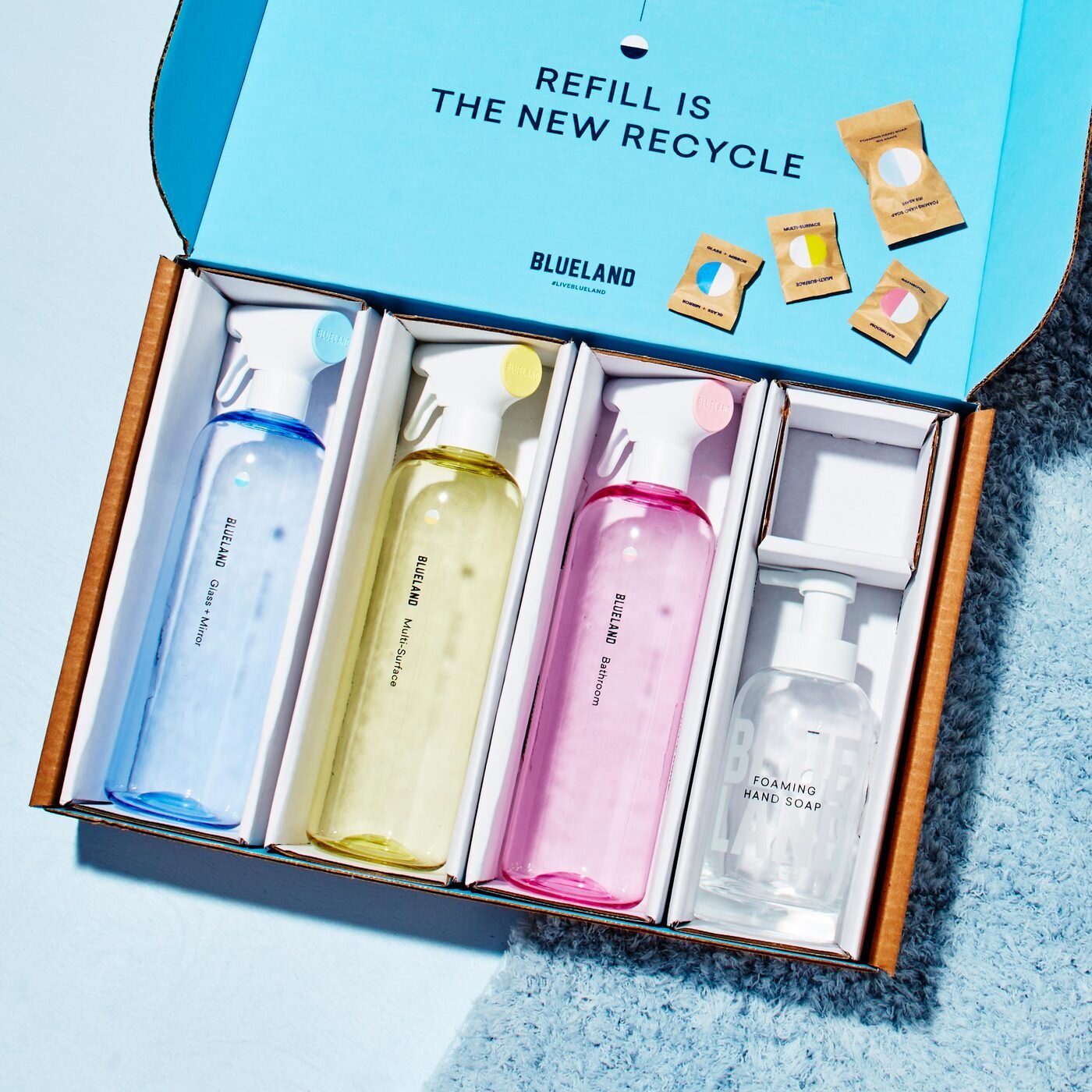
    BLUELAND: Refillable, plastic-free cleaning and laundry bottles, so you do not have to buy one-use plastic bottles throughout your lifetime.

    THE GOOD FILL: Zero-waste home goods store that offers refillable cleaning and body care products, with in-person stores encouraging byob (bring your own bottles).

    LOMI: Sells food composters that will quickly and efficiently break down vegetables, fruits, breads, and even meats.

    BIOLITE: Off-grid outdoor recreation products that are portable and energy efficient, like wood burning stoves and solar generators.

    BEE’S WRAP: Reusable, washable bees wax wraps as an alternative to plastic wraps.

    HEALTH & BEAUTY

    KRAVEBEAUTY: Sustainably sourced, organic, vegan skincare line pledged to shrink their carbon footprint. Sells products for all skin types.

    PROSE: Made-to-order, custom hair and skincare brand that recycles their packaging and pledges to carbon neutrality.

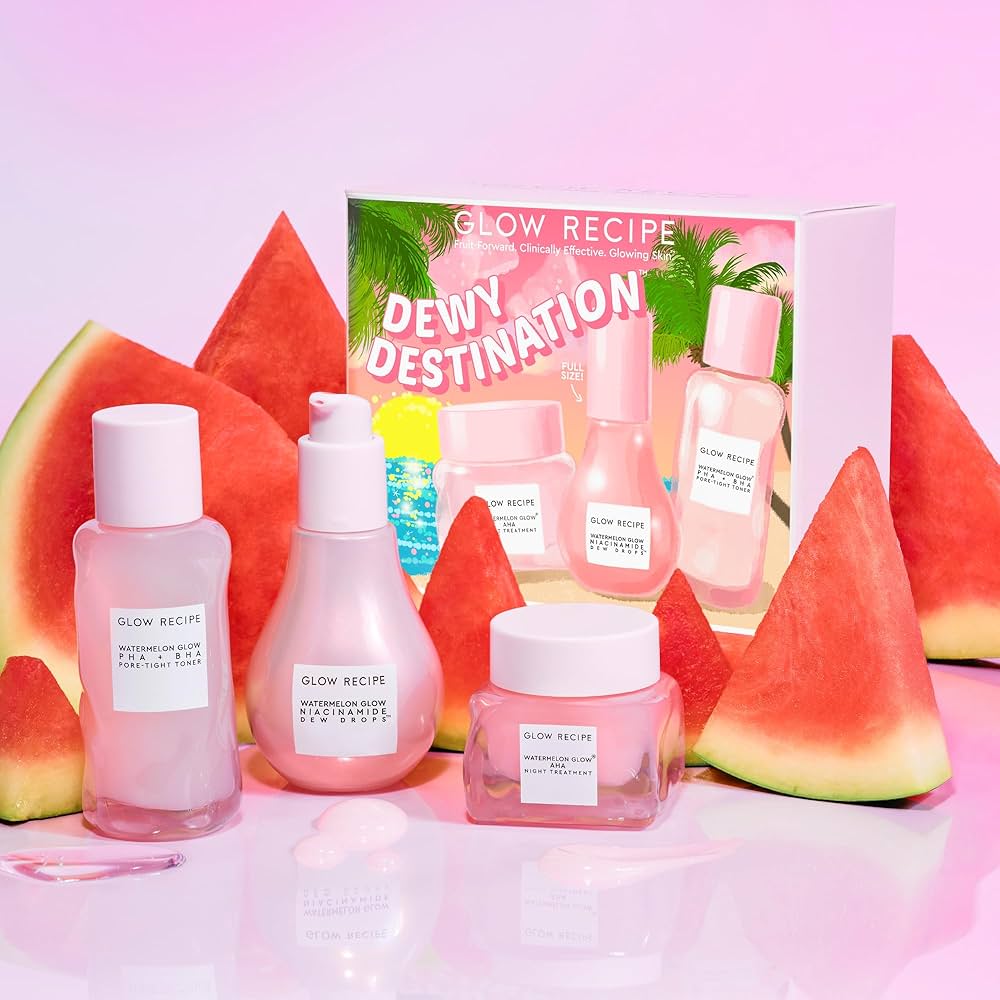
    GLOW RECIPE: A Carbon Neutral Certified, “fruit-forward” skincare brand that focuses on certain skin concerns, such as acne and dryness.

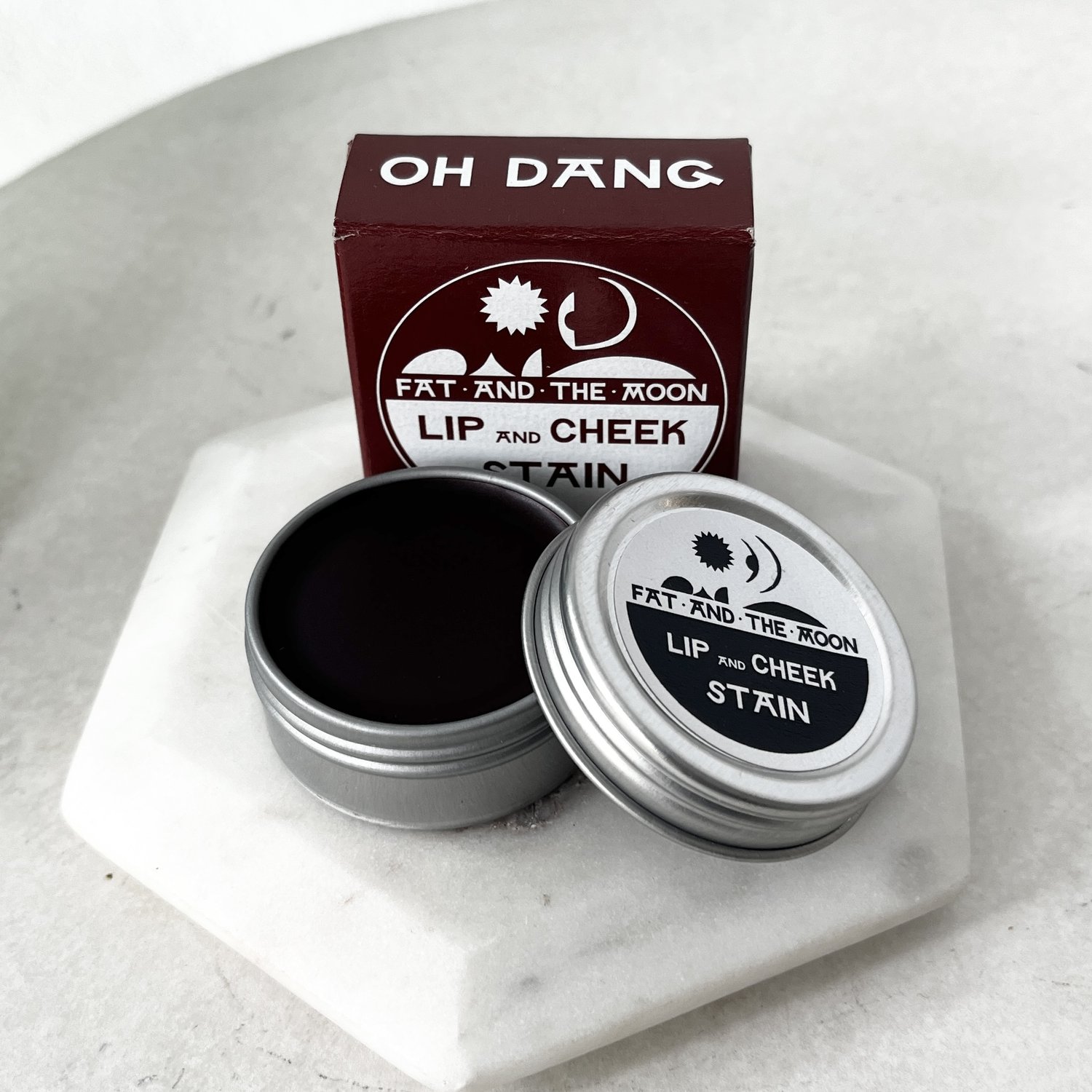
    FAT AND THE MOON: All-natural, handmade, botanical beauty products and herbal care.

    THE EARTHLING CO.: Natural and non-toxic haircare that sells the increasingly popular shampoo and conditioning bars.

    LEAF SHAVE: Plastic-free razors with a focus on blade safety, meant to last a lifetime.

    RIZOS CURLS: Latina-owned haircare line that comes in 100% recycled packaging, and also offers refillable bottles and pumps.

    AMIKA: Refillable haircare products for all genders, ages, and hair types.

    BOONBOO: 100% bamboo, zero-waste self-care items including dental floss, toilet paper, and toothpaste.

    ZERO WASTE STORE: Clean and sustainable skincare and cleaning products.

    FOOD & DRINK

    THRIVE MARKET: An accessible organic online grocery and appliance store with a delivery service.

    MISFITS MARKET: Grocery delivery service containing organic produce, mostly food items that had been left behind at grocery stores (e.g., perfectly edible apples with ugly brown spots), breaking the food waste cycle.

    ALOHA: Plant-based protein bars and powder that provide healthy fibers and sustained energy.

    RAINBO: Women-owned “functional” mushroom supplement business that is B Corp and Climate Neutral Certified.

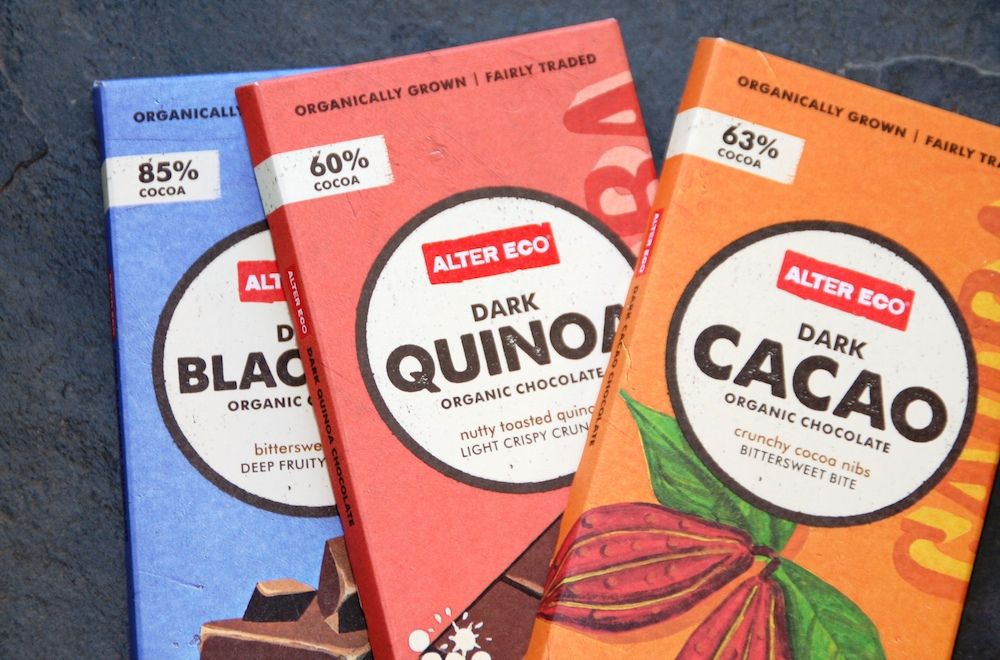
    ALTER ECO: Sells organic, non-GMO chocolates, granola, quinoa, and other food items. Even has compostable candy wrappers.

    HIKERS BREW COFFEE: Sustainable coffee brand that comes in compostable packaging.

    VAHDAM TEAS: Premium herbs, spices, and teas from India pledged to plastic and climate neutrality.

    NUMI ORGANIC TEA: Premium, fair-trade tea company.

    BONTERRA ORGANIC VINEYARDS: Wine produced by regenerative organic agriculture with organic grapes.

    BOTANICA WINES: American winery that utilizes regenerative, organic farming practices.

    SUNDAY BEER CO. PURE BREWING: Non-GMO, 100% carbon- neutral beer company.

    PET SUPPLIES

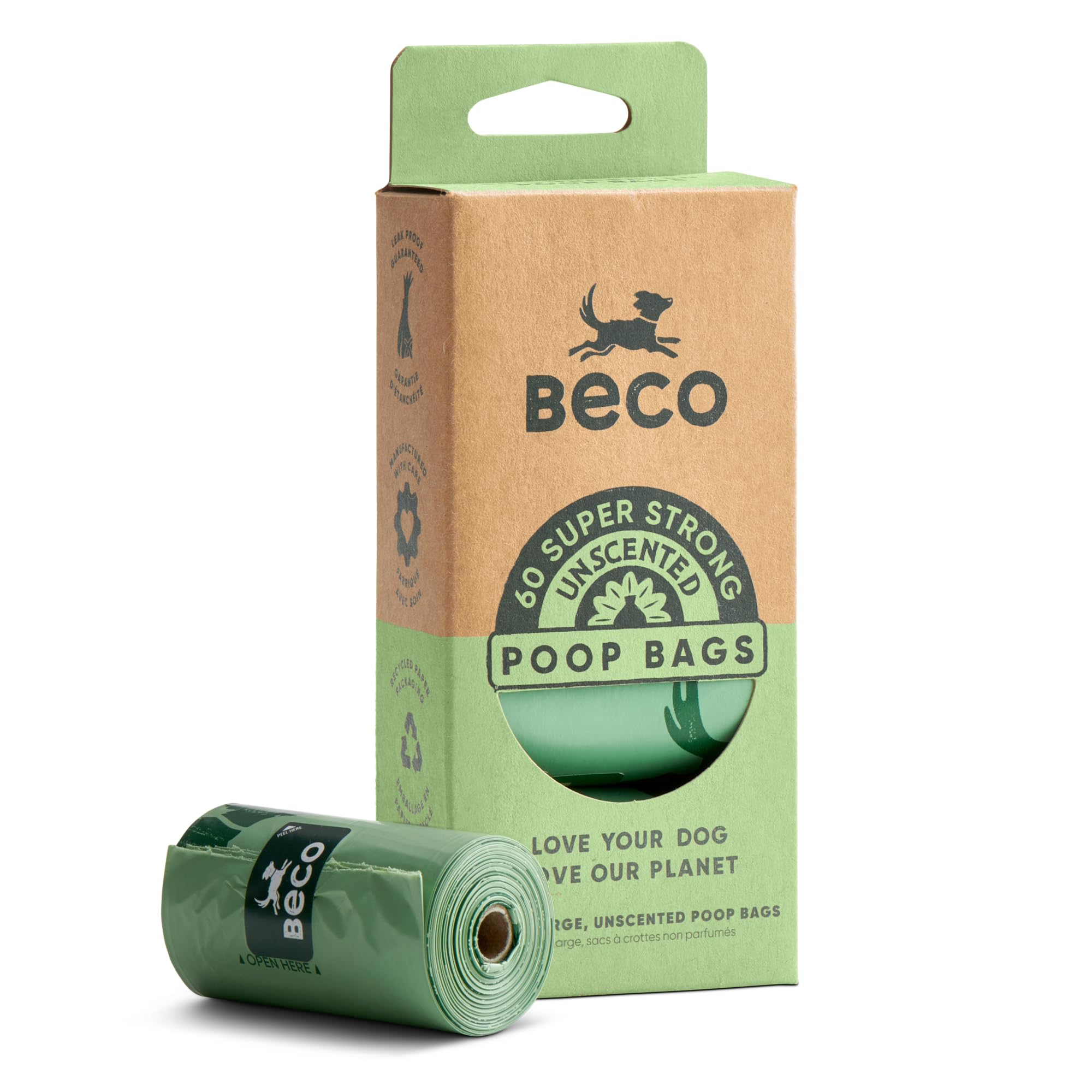
    BECO: High-quality, sustainably made pet food and products–specifically for dogs.

    MOLLY MUTT: Eco-friendly, 100% cotton dog beds that can be washed and upcycled.

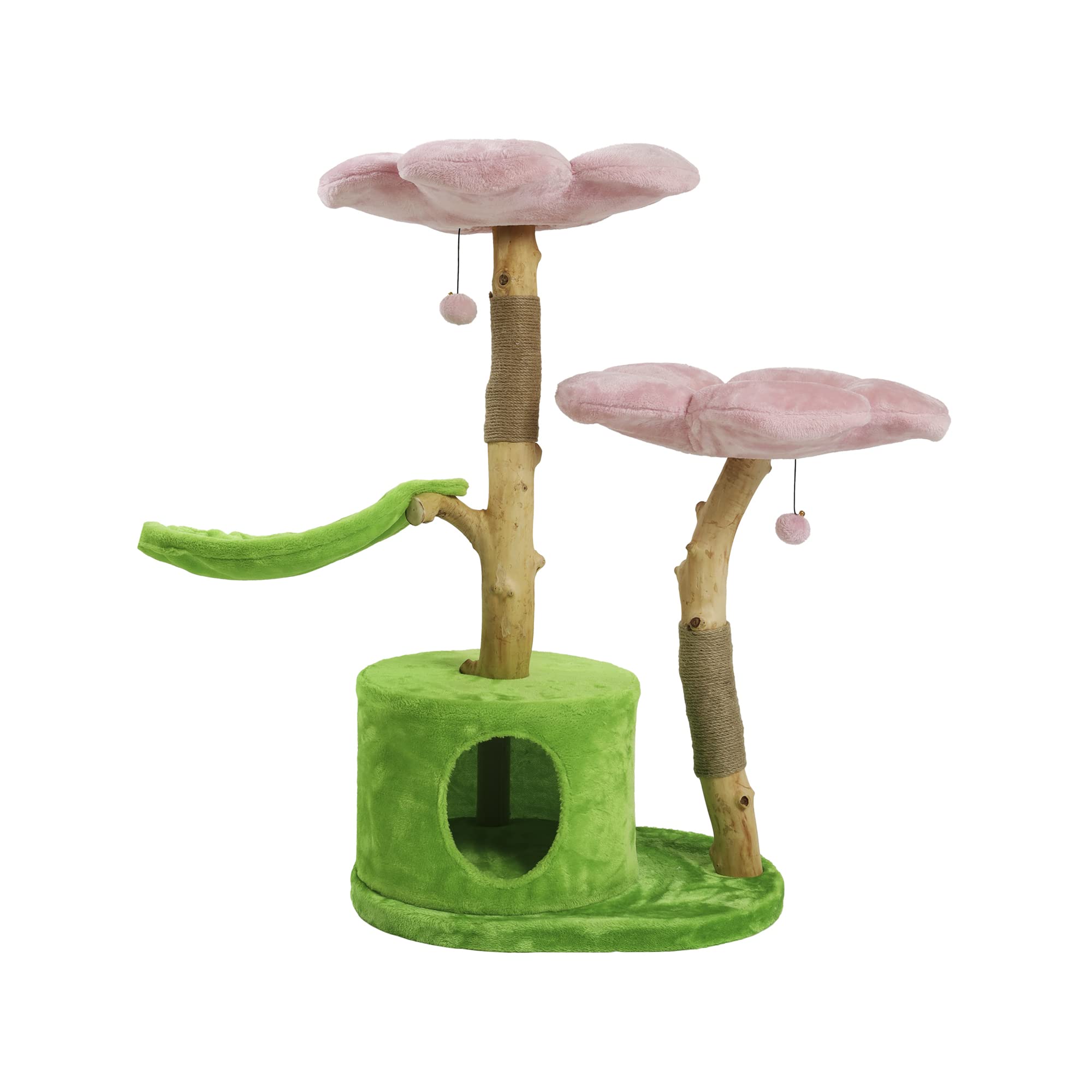
    KBS PETS: Climate-neutral brand that makes unique, natural wood cat trees.

    TECHNOLOGY & MEDIA

    DECLUTTR: Affordable tech refurbishing service encouraging the reduction of e-waste.

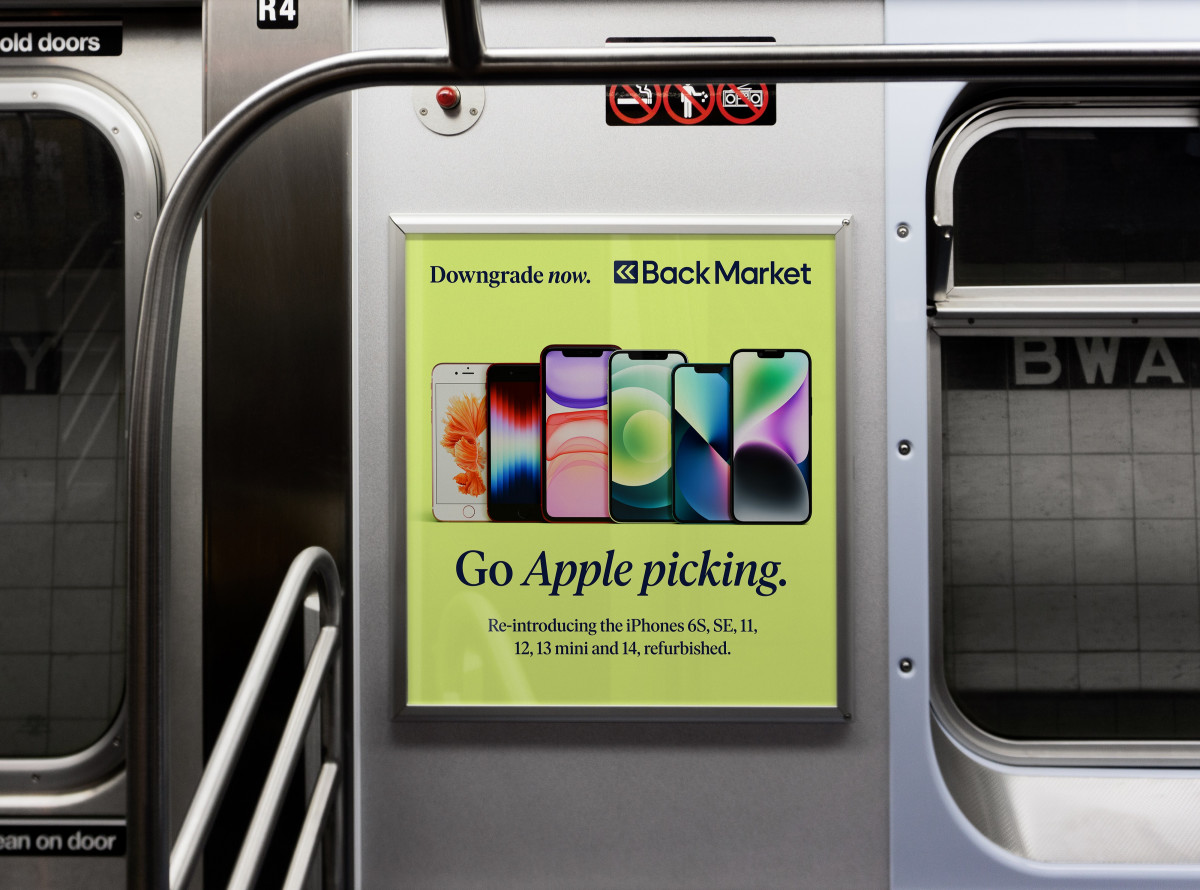
    BACK MARKET: Like Decluttr, refurbishes and sells pre-owned phones, laptops, and other tech.

    PELA CASE: Eco-friendly phone cases crafted from biodegradable flax shive and plant-based biopolymers.

    BOOKSHOP: Connects readers with booksellers all over the world, supporting independent bookstores over conglomerates like Amazon.

    OTHER

    EARTHERO: An ethical online marketplace that sells sustainable products from over 300 different brands. Any synthetic product they sell is made of at least 70% recycled materials.

    EMIKENI: Sustainable fashion and products aimed to empower femininity.

    PRESERVE: Recycled and recyclable household products.

    GIFTS FOR GOOD: Women-owned, climate-conscious business that donates to reforestation, plastic removal, and clean drinking water efforts.

    LIFESTRAW: Sells water filters and purifiers, and has a Give Back Program aimed at providing children with safe drinking water.

    RUMPL: Camping, hiking, and other outdoor recreational blankets and gear made from recycled materials.

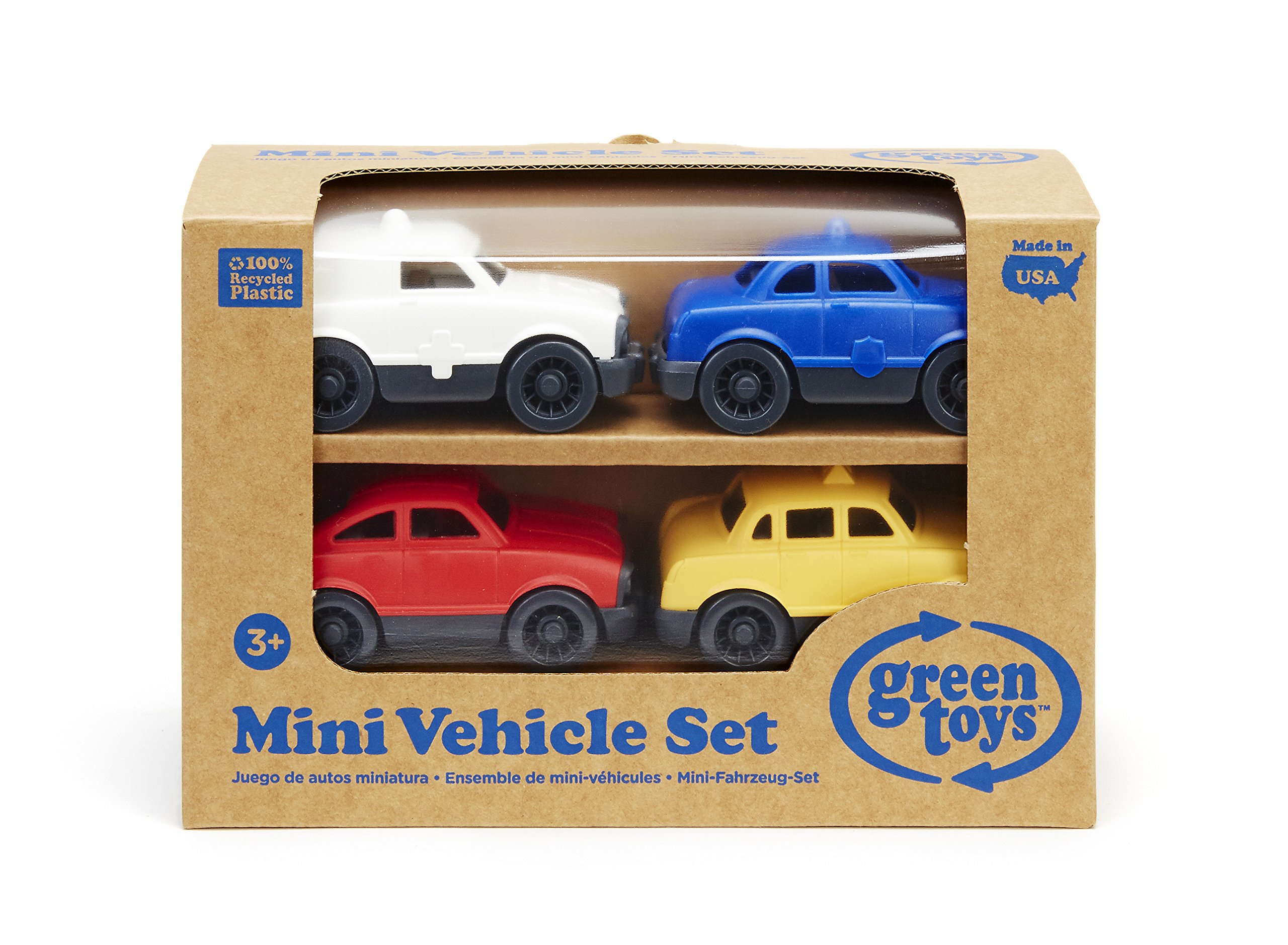
    GREEN TOYS: Children’s toys made out of 100% recycled milk jugs.

    ————————————————–

    The Six of Pentangles is a signifier of thanksgiving. We must remind ourselves to be charitable and giving, and appreciate all the good we receive.

    ————————————————–

    eco-friendly, environment, holiday, lifestyle, non-plastic, online shopping, recycle, Sustainability, sustainable brands, zero-waste
    Khloe Turner's avatar

    Freelance writer and environmental justice advocate

    Khloe Turner

    • Instagram
    • Tumblr
    • LinkedIn
    No comments on A Merry Green Christmas
  • Observational Note #2

    September 29, 2024
    environmental issues, natural disasters, observational notes

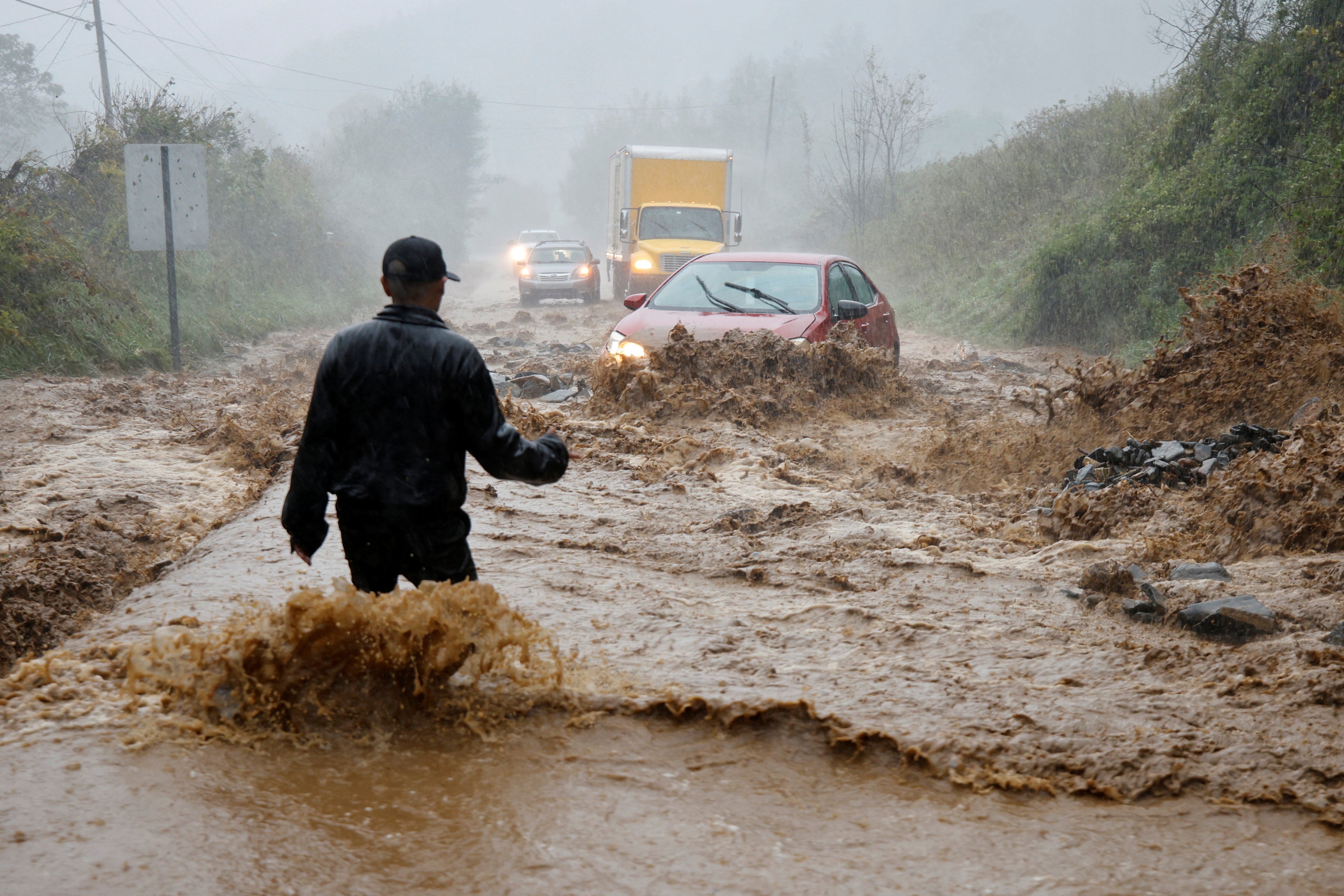
    Photo from The State

    As a resident of the southeastern United States, I was within impact of the almighty Hurricane Helene.

    Seldom a word said about this tropical cyclone beforehand. Just another typical storm, perhaps it will last measly hours. This is not an unusual perspective from a southerner, as Atlantic storms happen incredibly often, and it seems to rain around here at least 300 days out of the year. I have an abundance of childhood memories of being graced with weeks off from school due to potential dangerous circumstances, hardly ever coming to light aside from strong winds and days of rain.

    But Helene was different. Beware of the Hs.

    A sudden shift in direction; a quick and swift rise to power and Mother Earth’s imitation of Sherman’s March to the Sea. A death toll slowly rising; an epic financial disaster; mass, arborical casualties and homes completely leveled . . .

    For South Carolina, this has been the deadliest storm since the infamous 1989 Hurricane Hugo. Places like Atlanta, and more-so Asheville and its surrounding areas are completely inundated. Some of my childhood travel sports are wiped from the face of the planet as if Genesis’ Great Flooding decided to take it one step at a time.

    Photo from The Independent

    Luckily for myself, my area suffered a massive punch to the face for only a day. Several houses in my neighborhood are ruined, and large trees have tumbled through fences and homes and streets. The power had been out for two to three days, as part of the incredible 4.5 million power outage metric. My town, typically aglow like a parade of giant fireflies, had been completely engulfed in darkness. The traffic lights were off, restaurants and retailers were all closed . . . an instant shortage of meats and gasoline and ice was due to the brisk onslaught of mass apocalyptic mentality, paired with failing refrigeration.

    For me, in the grand scheme of things, the outcome was not so bad. I mean . . . a power outage for only two days? I can find protein sources outside of chicken and beef. Also, my house and vehicle are perfectly okay. My life has not been upheaved.

    But this is not the case for a lot of people. Some others lost their livelihoods . . . and their life. The death toll has hit over 60 thus far.

    Just from simple observations in my area, plant life is scattered like carnage and people are constantly praying to Dominion Energy–like angels in the flesh–to receive light and air-conditioning. It remains hot like Hell here. The other night we hid in the basement at the alarms of tornado warnings, but fortunately nothing came to fruition (although it certainly sounded like a tornado was happening outside). Well, overall, it was certainly a dent in my otherwise boring week.

    And who knows? There are eight identifiable hurricanes in the Atlantic within 2024. More is to come. With the warming waters and extended summers . . . we must be prepared.

    ————————————————–

    The Tower Arcana is a signifier for disruption. We must brace ourselves for uncertainties and sudden changes within our lives.

    ————————————————–

    Atlantic ocean, climate change, hurricane, hurricane helene, natural disasters, news, southeastern USA, tower arcana, tropical storm, weather
    Khloe Turner's avatar

    Freelance writer and environmental justice advocate

    Khloe Turner

    • Instagram
    • Tumblr
    • LinkedIn
    No comments on Observational Note #2
  • Observational Note

    September 9, 2024
    environmental issues, observational notes, Uncategorized

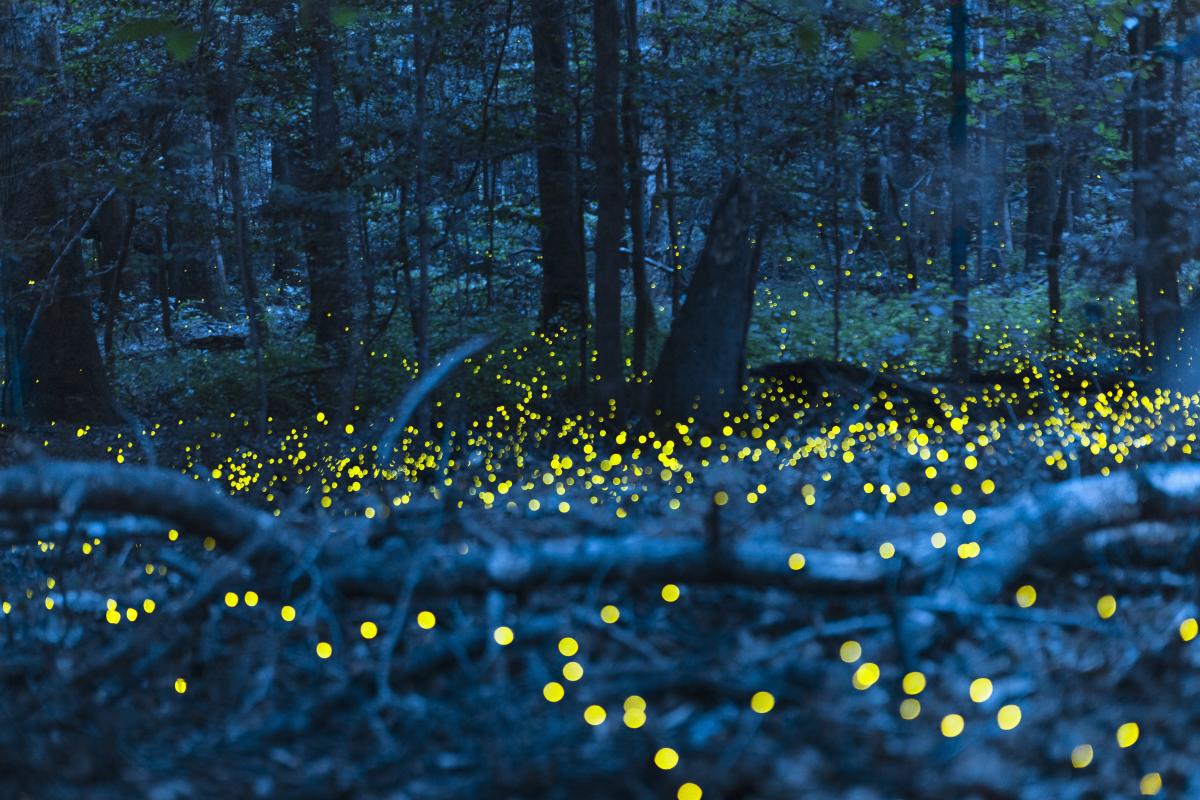
    Photo from Experience Columbia

    Typically, my community witnesses a flurry of fireflies–or “lightening bugs”–in the early summer months. My backyard becomes alluringly lit up by these creatures in the warm breezes of May and June. This is about the time of year where my local park hosts a “Firefly Festival,” a synchronous viewing event where one can peacefully watch these little critters flash like twinkling stars in search of a mate.

    This annual event has been occurring for the majority of my life. This is the marker in which my body and spirit know that summertime has arrived, and there is never a moment where the summertime skies are completely devoid of light. The days are longer, and the nights have become illuminated by nature.

    However, this has not been the case for 2024. In repeated attempts, I would seek out the lightening bugs outside for months and months to very little success. I awaited May, June, July, and even August to see the light show that always naturally falls into my view. Not anymore.

    Where did all the fireflies go? I wonder; this unanswered curiosity had left me somber.

    I cannot really think of anything too unusual happening in my community. Perhaps it has been the rapid increase of urbanization as the population continues to skyrocket here due to mass migration. Perhaps this leads to more light pollution, confusing the poor insects. Or, rather it is the typical circumstances of climate change, being one of the hottest summers on record. I am honestly unsure.

    But, just the other night, as September dawned upon us: there they were. The fireflies are returning. I saw their gentle glows outside of my bedroom window, returning to brighten up my nights as the daylight hours begin to diminish with the encroaching equinox. My yard has been illuminated once again, and like eye-candy I watched them dance around for hours.

    This is not their typical mating season, though. While I have finally been able to spot them, the fireflies are not as abundant as they would’ve been months ago. But, that’s alright. I am glad they are here.

    The fireflies are quite late this year, and while their presence in September is not entirely unusual, I cannot help but wonder where they have been hiding all this time . . .

    ————————————————–

    The Star Acana is a signifier for renewed hope. We shall accept these blessings from the universe and look positively towards the future.

    ————————————————–

    environmental issues, fireflies, light pollution, lightening bugs, observation, star aracana, summer
    Khloe Turner's avatar

    Freelance writer and environmental justice advocate

    Khloe Turner

    • Instagram
    • Tumblr
    • LinkedIn
    No comments on Observational Note
  • Wetlands: A Quiet Victim

    August 17, 2024
    environmental issues, personal post, video games

    In great news, at a personal level, I finally have the ability to move into a new home–within a small city surrounded by wetlands. I have lived along coastlines my entire live, encompassed by peat, moss, turtles and frogs. Being said, I also have firsthand experience of the unfortunately rapid decline of this beautiful biome.

    Photo of a marsh in Kiawah Island in Charleston, SC

    Photo from Kiawah Island Community Association

    Although, I feel as if discourse surrounding the degradation of the wetlands often gets overshadowed or ignored. Perhaps this is because many feel irked by the mushy, mustiness of swamps and bogs; the imbedded associations with mosquitoes, potential disease, and even the mythical (e.g., ogres of course); and out of any “body of water,” wetlands do not come to mind when considering the leisure of swimming.

    Unless you are a wetlands local, it is unlikely that you will hear about its benefits, and the issues they face. There is a variety of external factors contributing to the loss of this ecosystem, including pollution, microplastics, land privatization, highway construction, and the introduction of invasive species.

    The Decline of the Wetlands

    The situation is quite bad.

    To point out a specific example, let’s talk about the city of Charleston, South Carolina, which is a heavily popular tourist area located around marshes and blackwater swamps.

    Photo of the I-526 or Mark Clark Extension

    Photo from the Mark Clark Extension website

    Last year, the South Carolina Department of Transportation proposed the Mark Clark Extension Project aiming to fill in 38.53 acres of wetlands with the I-526 Extension. The intention is to lessen the density of the infamous Charleston traffic, and “increase safety and mobility.” To be more specific, according to The Post and Courier, “the project would impact 27.49 acres of freshwater wetlands, 0.02 acres of streams and tributaries and 11.02 acres of tidal/Critical Area Waters.” Not only that, but much acreage of James Island County Park will be affected as well, including its public access to creeks and climbing walls.

    The funding for this project will be heavily reliant on the 2024 sales tax referendum happening in November. So far, it seems that the issue is heavily contentious, and is being opposed by nonprofits like the Coastal Conservation League. Voting “yes” to re-approve Charleston’s transportation sales tax will cause the 9% sales tax to persist until 2041, with 34% of it going to the I-526 Extension.

    Map of the I-526 or Mark Clark Extension proposal

    Photo from the Charleston City Paper

    Here is a link to the Mark Clark Extension Project: https://www.scdotmarkclark.com/

    Here is a link to Charleston County Greenbelt Program’s community assessment: https://greenbelt.charlestoncounty.org/pdfs/Mark%20Clark%20ReportFinal.pdf

    Finally, here is a piece by the Coastal Conservation League on their view of the Mark Clark Extension: https://coastalconservationleague.org/projects/i-526-extension/

    —————

    Highway development is only one component towards the decline of the wetlands, in which signifies that wetlands are nothing more than a “nuisance” to human activity.

    John's Island marsh in Charleston, SC

    Photo from The Post and Courier

    Over 33% of the world’s swamps, bogs, marshes, and fens have disappeared since 1970. Due to this decline, 83% of freshwater species are now facing endangerment and extinction. This is a big deal. In case you are wondering what this means for humankind, the loss of wetlands will dwindle the ability to partake in outdoor recreation, like fishing, hunting, photography, and utilizing its flora for aesthetic, consumption, or healing purposes. Most importantly, however, humans need wetlands for flood, storm, and erosion protection, carbon capture, and to purify polluted water.

    It is quite sad. This precious, productive natural resource is facing a lonely abandonment.

    —————

    Interactive Advocacy

    On a lighter, somewhat random note, I recently was able to play a game called Kamaeru: A Frog Refuge that came out earlier this summer.

    Photo of Kamaeru: A Frog Refuge video game

    Photo from Movies, Games and Tech

    I enjoy video games, and while Kamaeru is not a perfect title, it reminds me that video gaming can be an interesting, interactive advocacy tool. Many people nowadays play games–or at the very least this hobby has been more normalized–and gaming has the potential to spread awareness of issues that may otherwise be overlooked.

    Kamaeru is a cozy “creature collector” that focuses on wetland restoration and the preservation of frog species. It teaches key ideas about carbon capture, how invasive species (e.g., nettles) affect native ecosystems, and how humans can harness the abundant resources wetlands provide, like berries and cattails. In the meanwhile, players can also decorate and expand their “frog sanctuary” and accrue different colors and patterns of adorable froggies. The frogs had been victims of wetland degradation, and the main protagonists Axel and Cleo are trying to reconstruct their home.

    Another fun video game is called Kudzu, a modern-day aesthetical callback to the Gameboy era featuring the wicked power of the kudzu plant. Kudzu is a climbing, fast-growing perennial vine native to East Asia, but has unfortunately invaded North America, overtaking and killing indigenous plants and preventing the growth of small hardwood trees.

    Photo of the video game Kudzu

    Photo from Movies, Games and Tech

    The game plays in a Metroidvania fashion, and humorously delves into the destructive, almost wizardly abilities of Kudzu, which the player must face heinous creatures and rescue their mentor, Master Zoen. While Kudzu is not particularly a conservation-oriented game, it does offer a creative take on the plant and its real-world dastardliness.

    —————

    I mention these video games because aforementioned, I think video gaming is a great way to spread the message about something as undermined as the wetlands. Not many people encounter this biome on a daily basis, but it is nonetheless of major significance, and it is an ecosystem I have called home for decades . . .

    **Also, to note, I wrote game reviews for both Kamaeru: A Frog Refuge and Kudzu on Movies, Games and Tech! Here is the link to my portfolio there: https://moviesgamesandtech.com/author/kjoliet13/

    ————————————————–

    The Suit of Wands is a signifier for creative approaches to everyday problems. We must harness passion and innovation to incite change.

    ————————————————–
    Charleston SC, climate change, environmental issues, kamaeru, kudzu, suit of wands, swamps and marshes, wetlands
    Khloe Turner's avatar

    Freelance writer and environmental justice advocate

    Khloe Turner

    • Instagram
    • Tumblr
    • LinkedIn
    1 comment on Wetlands: A Quiet Victim
  • Tragedy of the Waters: The River Seine

    July 30, 2024
    environmental issues, news, opinion
    Paris 2024 Olympics Opening Ceremony River Seine

    Photo from NBC Sports

    Apropos of the 2024 Olympic Games, both media and word of mouth has been spreading concerns about the safety and cleanliness of the Seine River: a massive, 483 mile-long river in which its basin covers a considerable portion of Northern France. It is at the Seine where the opening ceremony occurred; hosting a grad queen-centered fashion vignette, a colorful water display, and a parade of boats holding the vivacious spirits of each 206 Olympic teams. The river is also to host the swimming portion of the men’s triathlon.

    The Seine River is known to be incredibly polluted. For centuries, the river has suffered as a reserve for wastewater, “forever chemicals,” and bacteria such as E.coli. Swimming in the Seine has been banned since 1923 — over a century. The Seine, however, is not the only befouled body of water in Europe. The continent has had historic issue with managing agriculture, sewage, and industry runoff, causing an incorrigible slew of toxins.

    Think of the Thames that flows through London. In the early stages of the Industrial Revolution, London’s poor sewage systems allowed waste to directly deposit into the river, causing the “Great Stink” of 1858.

    According to the European Environment Agency, around 60% of EU rivers, wetlands, and lakes are “not healthy,” meaning notably polluted.

    France had spent 1.4 billion euros to prepare and clean out the Seine. One major project was the construction of a large basin intended for capturing excess wastewater and rainwater. Sewage infrastructure and treatment had been updated as well. The Austerlitz train station’s basing, however, became steadily filled with rainwater following last Friday’s precipitation.

    To demonstrate that the river has been successfully cleaned, Mayor Anne Hidalgo of Paris briefly swam around in the Seine two weeks before the Olympics began. Despite trying to alleviate concerns, the men’s triathlon has been postponed several times due to the constant need to re-test the water after Friday’s rainfall.

    Personal Note

    The world still has a long ways to go to fix these centuries-long issues. Water is the giver of life; water makes up most of the human body, and we can learn, heal, and be born from its properties. Yet, humans have become parasitic to the health of the earth’s rivers and oceans, polluting this precious resource to unnecessary degrees.

    Have we turned a blind eye to mass marine deaths? To the eras of acid rain? To the increased frequencies of floods and droughts? To the lead and microplastics in our drinking water?

    The concerns about Paris’ rivers are valid. It may be costly to clean them and test them so frequently, but it is a high necessity nonetheless. To think that so many urban cities are ineloquently located near “dog water” is a great misfortune, and an ultimate hazard to human health and the flora and fauna around us.

    ————————————————–

    The High Priestess Arcana is a signifier for wisdom and truth. We must remember to pay attention to the circumstances around us, and unravel bitter realities.

    ————————————————–

    climate change, environment, environmental issues, France, high priestess arcana, news, olympics, Olympics 2024, Seine, water health
    Khloe Turner's avatar

    Freelance writer and environmental justice advocate

    Khloe Turner

    • Instagram
    • Tumblr
    • LinkedIn
    1 comment on Tragedy of the Waters: The River Seine
  • Mining the bedrock — SCOTUS 6-3 Decision to Overturn Chevron

    July 16, 2024
    environmental issues, news, opinion

    On June 28th, the U.S. Supreme Court overturned the long-standing 1984 Chevron U.S.A., Inc. v. Natural Resources Defense Council Inc. decision, greatly diluting the powers of federal agencies. In particular, this landmark decision hit the Environmental Protection Agency quite hard.

    The “Chevron deference” has been cited in over 18,000 cases. The Supreme Court’s decision to overturn this deference may send massive shock waves throughout the federal system–and a sudden shock is hardly without some chaos.

    “The decisions are likely to present challenges to preserving the many decades of progress we have made in protecting people and the planet,” says Kameran Onley, managing director of North America Policy and Government relations.

    What is the Chevron Deference?

    The intention of the Chevron deference was to boost the decision-making and rule-enforcing abilities of government agencies without the threat of legal battle. Specific government agencies would be differed to if a law contained vague or unclear statements. When differing to an agency, they would then interpret the meaning themselves and the corporation or market would have to yield to this interpretation.

    The Chevron deference had been heavily utilized by the EPA in cases regarding environmental safety, usually in regards to the Clean Air Act and Clean Water Act.

    In 1977, the Clean Air Act was amended to require all projects that would create major “stationary source” of air pollution go through an extensive process called “new-source review” by the EPA. Originally, the EPA interpreted this amendment to mean that even something as small as a single machine–like a boiler or smokestack–could be considered a key source of pollution.

    However, during Ronald Reagan’s administration, the EPA changed its interpretation to define the entire building or plant at the major “source.” As long as the plant did not increase the total amount of air pollution output, buildings could work on project rather freely.

    The Origins of Chevron

    In 1981, the Natural Resources Defense Council filed a petition for review to the U.S. Court of Appeals for the District of Columbia Circuit. NRDC was challenging the EPA’s new interpretation of “stationary sources.” The D.C. Circuit ruled in favor NRDC. Former justice Ruth Bader Ginsberg cited that the EPA’s new interpretation conflicted with the past interpretations in prior cases.

    Chevron Corporation, an oil and gas company, had been affected by the EPA’s interpretation of the Clean Air Act. As such, they intervened in NRDC’s case, appealing to the D.C. Circuit’s decision to the Supreme Court.

    The Supreme Court, however, overruled the D.C. Circuit’s decision in a unanimous 6-0 vote. It was determined that the EPA’s change in interpretation was completely valid, and the definition of a “source” should not be static. The new interpretation still appealed to environmental protection, but also preserved economic growth, in the court’s opinion. With this landmark decision, the Chevron deference was born.

    Essentially, if a law or statute is clearly defined, then the court’s opinion reigns supreme. If a law is ambiguous, then agencies’ interpretations of these gaps are necessary. Chevron had limited the courts’ power to overrule agencies in this case.

    What Happened?

    The Chevron deference was overturned in the case named Loper Bright Enterprises v. Raimondo.

    Loper Bright Enterprises is a New England-based fishing company who challenged the National Marine Fisheries Service. The NMFS  required domestic fisheries to pay for the cost of federal monitors that would be assigned to their boats, under authorization of the Magnuson-Stevens Fishery Conservation and Management Act. 

    Loper Bright Enterprises appealed to the D.C. Circuit, where the court applied the Chevron deference. Then, petitioning for a writ of certiorari, Loper brought the case to the Supreme Court asking: was using the Chevron deference appropriate regarding the NMFS requirement of domestic vessels paying the salaries of these monitors themselves? And, should Chevron be limited or eliminated entirely?

    In a 6-3 decision, the Supreme Court overturned the bedrock Chevron deference in agreement with Loper Bright Enterprises.

    Chair of the House Oversight and Accountability Committee, James Comer, stated, “The EPA has been, in my opinion, one of the worst — if not these worst — offenders of the bureaucrats interpreting the law in the leftist mindset.”

    The majority claims that interpreting ambiguity of laws falls “more naturally into a judge’s bailiwick than an agency’s”, and that Congress is fully capable of handling “technical statutory questions” themsevles, especially since they already have experts “at their disposal.”

    The Dissenters

    Three court justices dissented to this overruling, including Justice Elana Kagan, Justice Sonia Sotomayor, and Justice Ketanji Brown Jackson. Justice Kagan expressed worry that removing the Chevron deference would cause significant, sudden shock to the current system, and would allow the “inexpert judiciary” to seize unnecessary power and make uninformed decisions without the input of expert federal agencies.

    Kagan had wrote, “Score one for self-confidence; maybe not so high for self-reflection or -knowledge.”

    Future Implications

    The Chevron deference, while used often, was rarely cited or abused in terms of the EPA’s climate rules. In fact, there have been many moments where the Environmental Protection Agency’s deference was shot down anyways.

    With the undoing of Chevron, there will be a need to pass laws with more careful consideration of how clear its wording is . . in which would be near-impossible to do, since the nature of lawmaking is rather complex. There is also now a greater emphasis on the role of the people in determining the green agenda of lawmakers voted in Congress.

    “Given the dual crises of climate change and the loss of plant and animal species, we need to be top of our game when implementing the many groundbreaking laws that have been passed over the past few years and decades,” says Kameran Onley. “Despite some of the troubling implications of these cases, I remain confident that the federal government,” alongside local governments and conservation nonprofits, “will continue to be an important leader in protecting people and the planet . . . We have no other choice but to work together. Action is needed at every level of society to create the kind of world we want for ourselves and future generations.”

    Personal Opinion

    The Chevron deference is a double-edged sword. It is a justified response that this deference may have disrupted the balance of power, granting federal bureaucracy and the president a bit too much power in nationwide regulations that affect nearly everything in our daily lives. American citizens do not vote experts into these agencies.

    On the contrary, there are not many occasions where environmental health and safety is appropriately considered without the rules and regulations of federal agencies, like the EPA. Without this sort of stronghold and influence of specialized knowledge, will Congress be equipped to handle environmental issues? Will the majority of American voters consider these problems when voting? Will polluting companies feel more or less obliged to follow sustainable practices?

    It has been less than a month since SCOTUS’s decision. The Clean Air and Clean Water Acts are still instated. We can only hope that Congress and federal agencies can work hand in hand for the benefit of society. Hope.

    ————————————————–
    The Fool Arcana is a signifier for new beginnings. We will see where these decisions will lead us . . . for better or for worse.

    ————————————————–
    Tags: chevron deference, climate change, environment, environmental issues, fool arcana, news, supreme court
    Khloe Turner's avatar

    Freelance write and environmental justice advocate

    Khloe Turner

    • Instagram
    • Tumblr
    • LinkedIn
    No comments on Mining the bedrock — SCOTUS 6-3 Decision to Overturn Chevron
  • Welcome to Blue Mushroom

    July 9, 2024
    personal post, Uncategorized

    “Climate change is a lot like death. We all understand it’s inevitable, but few of us truly accept it.” 

    – Brian McDermott
    The Death Major Arcana tarot card

    Even as pressing issues penetrate the public sphere, true action continues to operate at a snail’s pace.

    On a daily basis, I am sure, we are constantly reminded of impending climate doom and environmental disaster. It is a taxing thought, for advocates and deniers alike. Those who try in any manner feel the weight on their shoulders and this inkling of doubt that their personal efforts provide no more than a fraction of a decimal of change. To those who still manage to deny any sort of climate change are only coping in their own way. It is the simple solution to put things on the back burner, but can lead to disastrous results.

    It is silly to say that individual effort will cause massive change (it is big corporations we need to glare at) . . . but it will do something, even if it’s as little as improving your mental well-being. To anyone and everyone, regardless of how “real” and how “human-driven” our changing climate is . . . why not do something anyways? This planet is our home, and deserves nurturing and respect. The earth is our collective mother.

    The point of this blog is to spread further awareness on environmental issues and educate readers on current ongoings. Awareness is the first step, and knowledge is key. I will happily share my findings and opinions here, and whatever else I yearn to write. Read at your own leisure.

    ————————————————————————————-

    The Death Arcana is a signifier for change and transformation. Old habits must die, and new, more thoughtful practices will make way.

    ————————————————————————————-

    Tags: climate change, death arcana, environment, environmental issues, introductory blog post
    Khloe Turner's avatar

    Freelance writer and environmental justice advocate

    Khloe Turner

    • Instagram
    • Tumblr
    • LinkedIn
    No comments on Welcome to Blue Mushroom

Blog at WordPress.com.

Blue Mushroom

With the birth of The World, the winds of blessing shall lead to freedom

    • About
    • Contact me
    • Environmental Organizations
 

Loading Comments...
 

    • Subscribe Subscribed
      • Blue Mushroom
      • Already have a WordPress.com account? Log in now.
      • Blue Mushroom
      • Subscribe Subscribed
      • Sign up
      • Log in
      • Report this content
      • View site in Reader
      • Manage subscriptions
      • Collapse this bar